


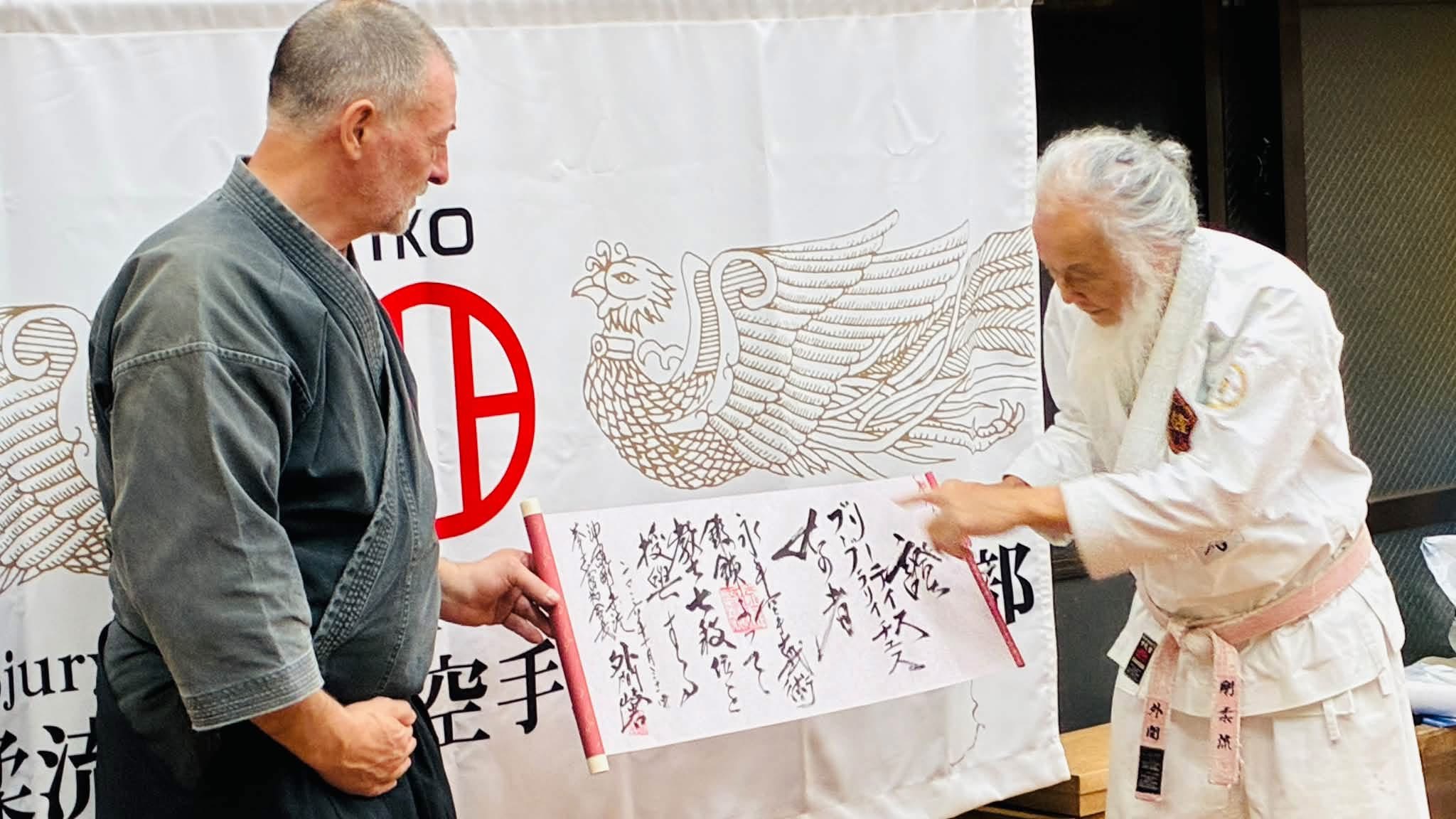
A Historic Milestone in the Birthplace of Karate: Lithuanian and Belgian Masters Visit Okinawa as Rytis Bublevičius Receives 7th Dan and Kyoshi Title For every traditional karate practitioner, a journey to Okinawa is a return to the very roots of this martial art. The recent visit by karate masters from Lithuania and Belgium to this Japanese island became an extraordinary event not only for the members of the delegation, but for the entire regional martial arts community.
The international delegation, brought together by Moidi Motobu-Ryu European Shibucho Hanshi Hubert Laenen (9th Dan) and Rytis Bublevičius, Head of the Lithuanian Karate Academy (Karatė Akademija), had a unique opportunity to train, gain knowledge, and take grading examinations directly under the highest-ranking Okinawan grandmasters.
Historic Recognition: 7th Dan and Kyoshi Title from IKO One of the most significant and solemn parts of the visit was the high-level grading examinations. Several masters of the delegation successfully passed examinations for very high Dan ranks, while historic news reached the Lithuanian karate community – Rytis Bublevičius was officially awarded the 7th Dan rank and granted the prestigious Kyoshi title on behalf of the International Kenshikai Organization (IKO) (officially the Okinawa Goju-Ryu Kenshikai Karate-do Kobudo Association).
This dual recognition – the master rank of 7th Dan and the title of Kyoshi (“teacher of teachers”), which corresponds to the academic status of a professor – represents one of the highest honors in the martial arts world. It is awarded only to masters who have demonstrated exceptional technical proficiency, deep knowledge of traditions, and decades of dedication to teaching.
Granted directly by Okinawan grandmasters and an authentic island organization, this 7th Dan and Kyoshi title is an extraordinary achievement – standing as one of the highest recognitions of its kind not only in the Baltic States, but across all of Scandinavia. 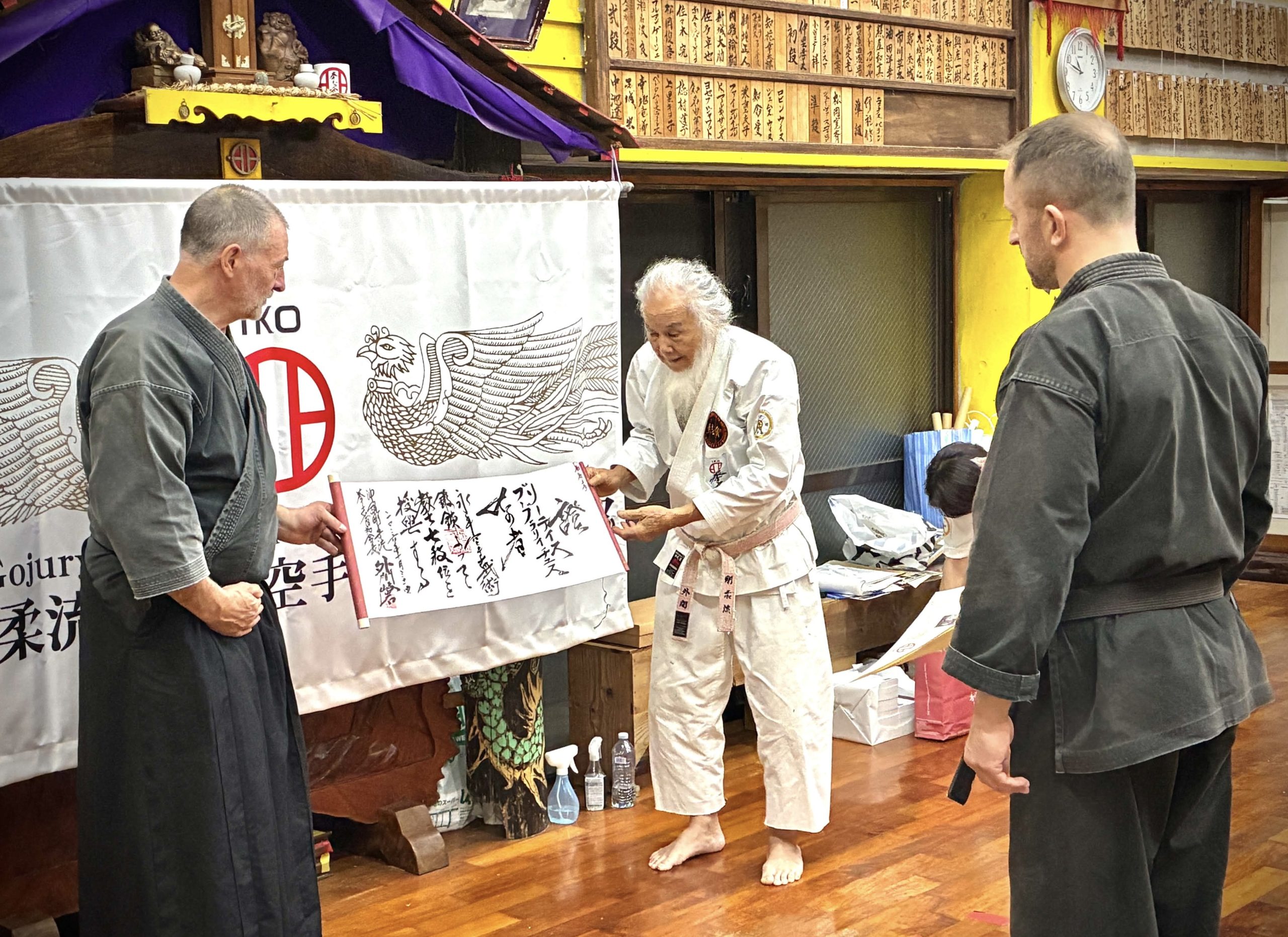
The Origins of Karate: Three Historic Okinawan Lineages To fully appreciate the significance of this visit, it is important to look at the history of Okinawan karate itself. Until the early 20th century, martial arts on the island developed in three main regional centers, giving rise to three foundational lineages: Shuri-te, Naha-te, and Tomari-te. It is from these historic roots that the modern traditional styles visited by the delegation emerged:
• Shuri-te (the tradition of the royal capital of Shuri) formed the foundation for Shorin-Ryu, a style renowned for its speed, natural movements, and dynamic power.
• Naha-te (the tradition of the port city of Naha, closely linked to Southern Chinese martial arts) evolved into Goju-Ryu, which combines hard and soft force with deep breathing techniques.
• Tomari-te (the tradition of the trading town of Tomari) strongly influenced the development of Uechi-Ryu, famous for body conditioning and practical combat effectiveness.
Four Styles – Four Priceless Experiences Beyond the examinations, the visit’s schedule was exceptionally intensive and enriching. The delegation visited authentic island schools (Dojo) where martial arts secrets are passed down from generation to generation. The doors were opened to the guests from Lithuania and Belgium by grandmasters of four traditional Okinawan styles:
• Uechi-Ryu Hozonkai (Gaja Sensei, 10th Dan): Training under 10th Dan master Sensei Gaja offered close insight into the subtleties of this hard-yet-fluid style, with special emphasis on body conditioning, breathing mechanics, and authentic Kata performance.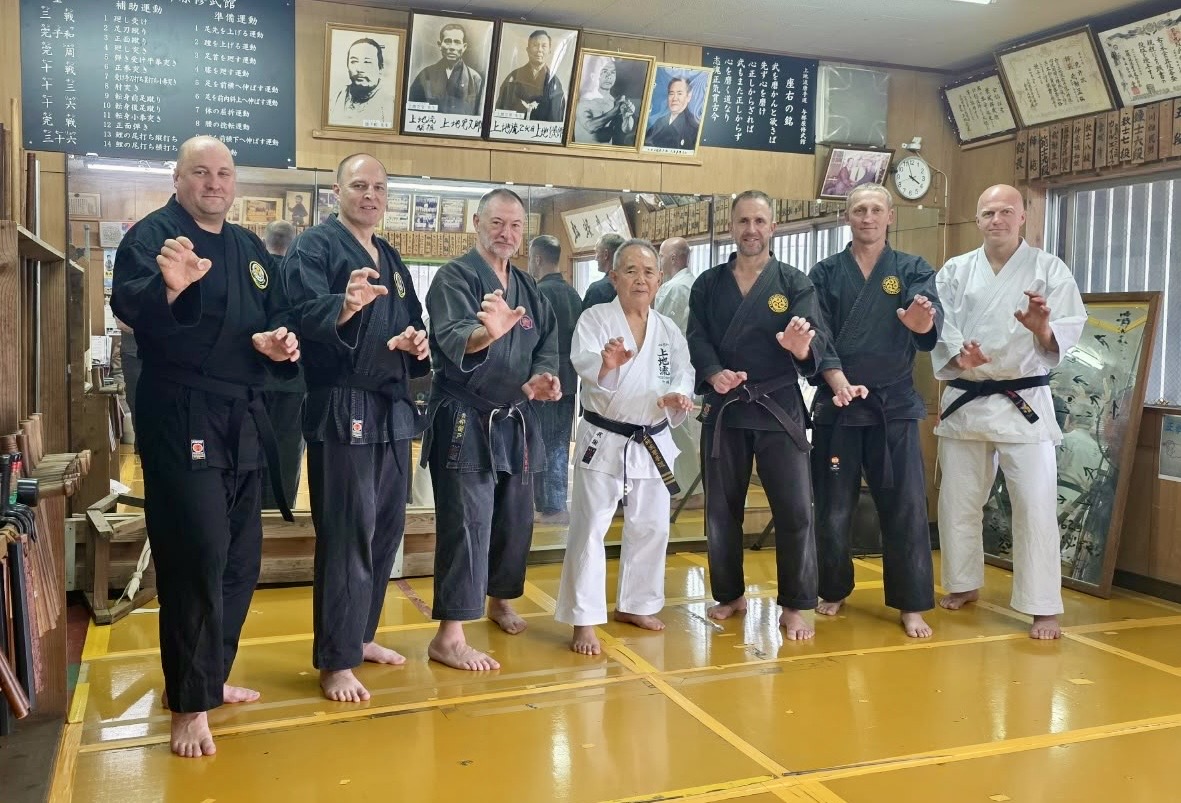
• Goju-Ryu Kenshikai (Hokama Sensei, 10th Dan): Meeting grandmaster Hanshi Tetsuhiro Hokama (10th Dan) – one of Okinawa’s most renowned karate historians and masters – became a profound lesson in deep traditions and martial arts philosophy.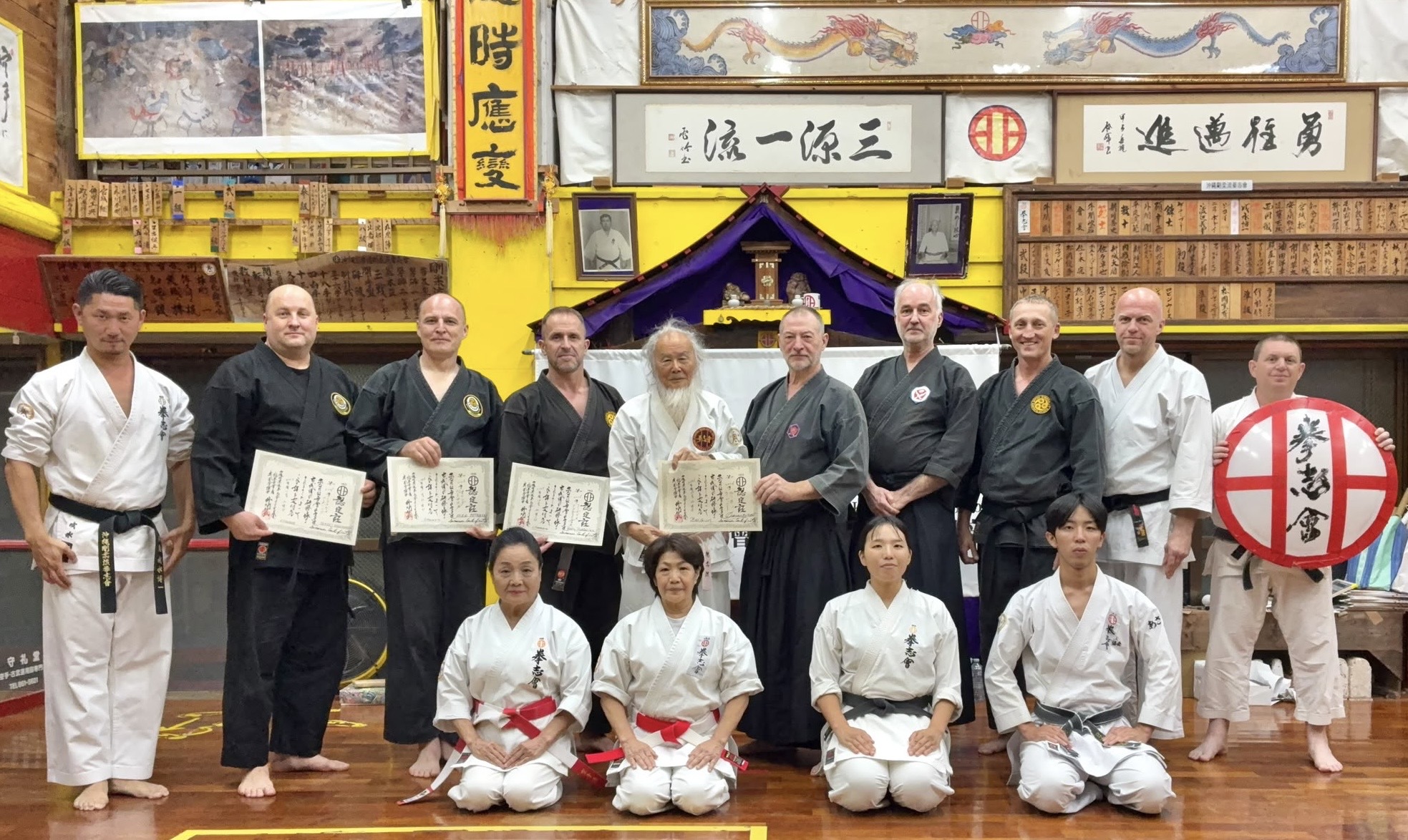
• Shorin-Ryu Myobukan (Higa Sensei, 9th Dan): Under 9th Dan master Sensei Higa, the delegation delved into the technical purity, speed, precision, and traditional combat principles of one of Okinawa’s oldest styles.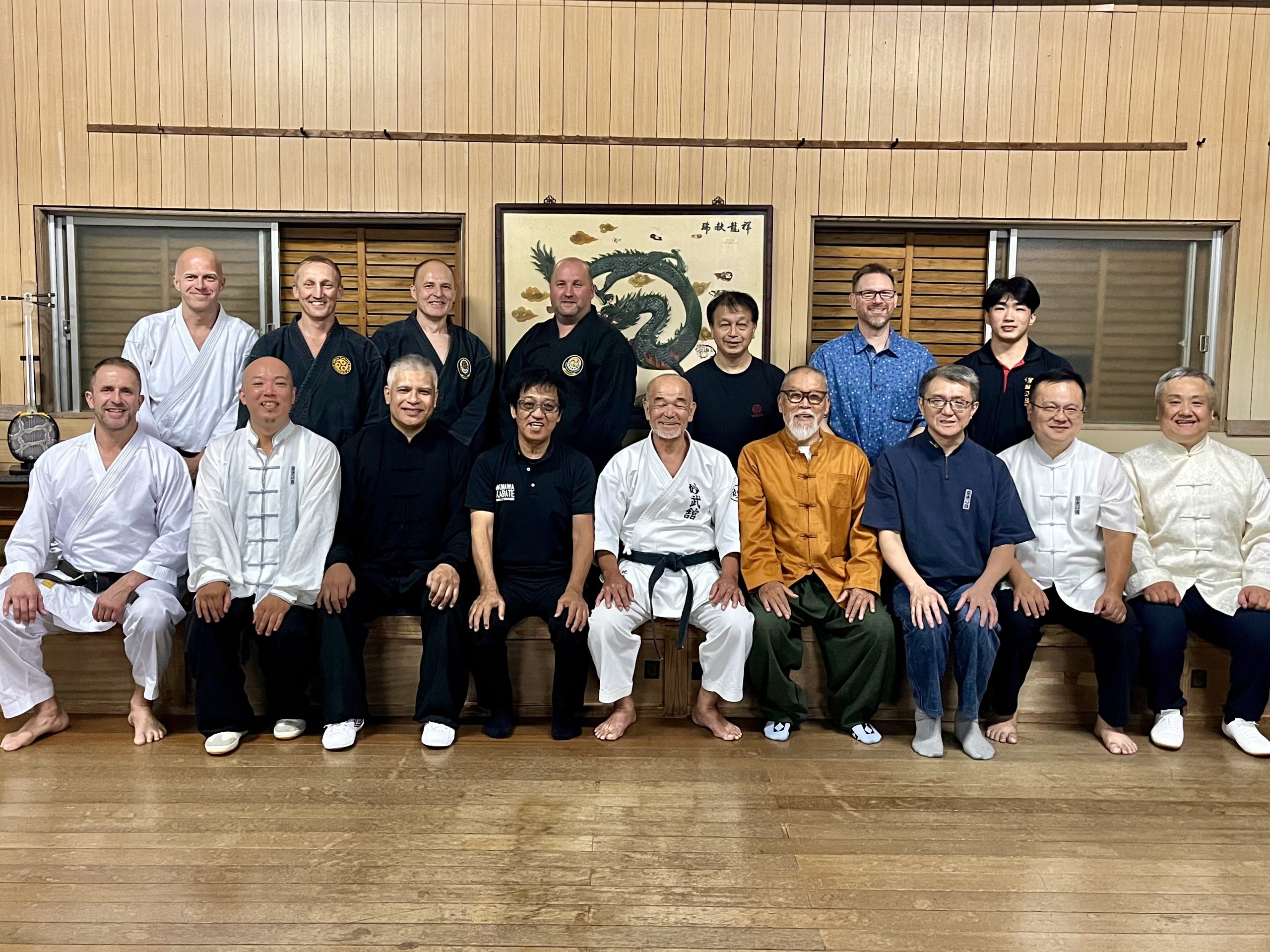
• Motobu-Ryu Moidi (Tamaki Sensei, 8th Dan): An exclusive experience whose doors open only to a select few. Surviving for nearly 500 years, this method (Motobu Udundi / Moidi) was once the secret martial art of the Ryukyu royal family’s personal bodyguards and remains one of the most closed traditional schools in the world today. Being permitted to learn from 8th Dan master Sensei Tamaki is an honor reserved only for those who have proven their sincere respect, goodwill, and deep dedication to ancient Ryukyuan culture over many years.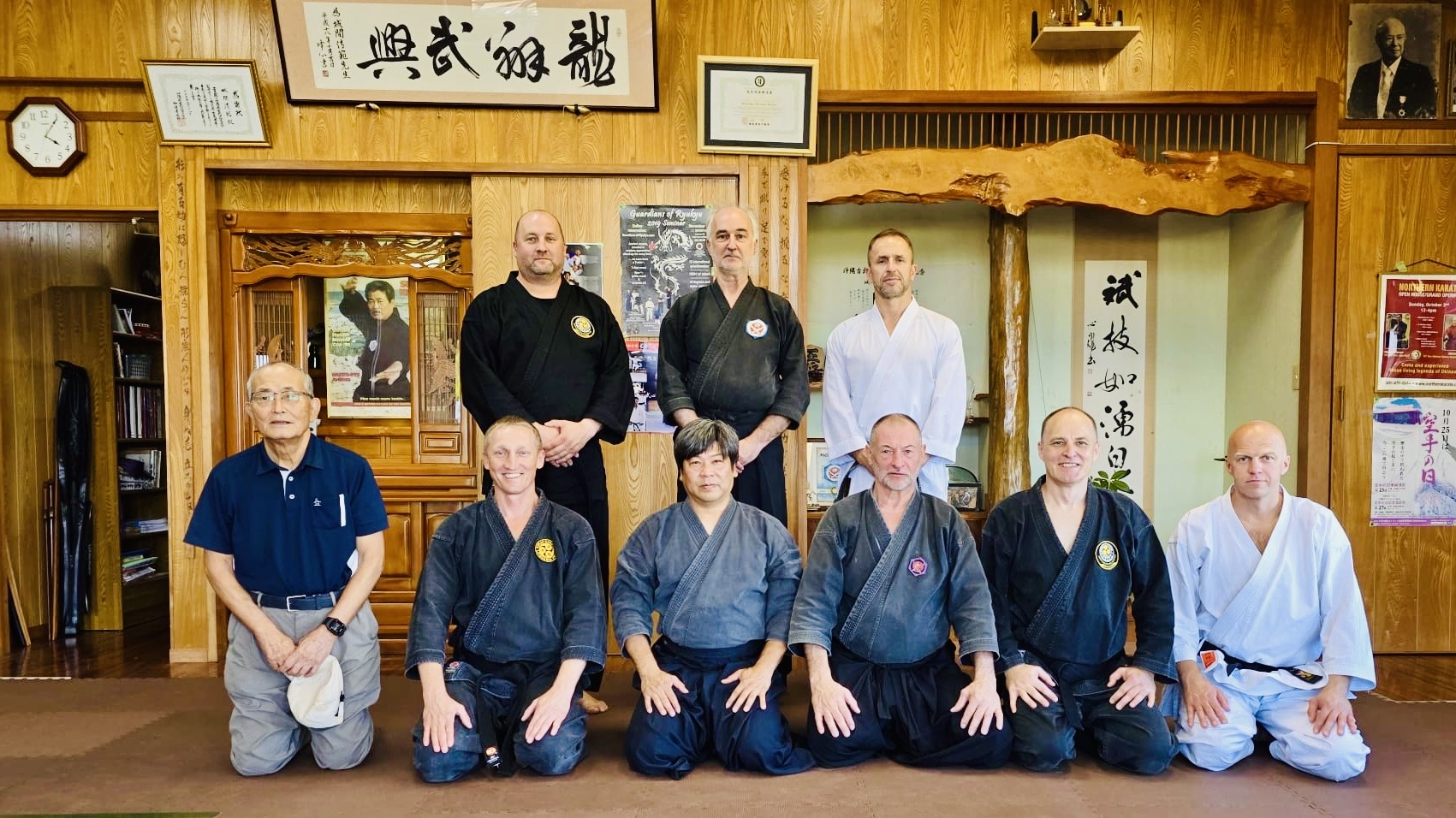
A Bridge Between Cultures and Inspiration for Future Generations This visit was not merely a marathon of intensive training, but also a remarkable example of international friendship. The shared experience of Lithuanian and Belgian masters in Okinawa once again proved that traditional karate knows no borders – it unites people from different nations through respect, discipline, and the continuous pursuit of self-improvement. The high recognition earned in Okinawa and the lessons received directly from legendary masters open a new chapter in Lithuanian karate history and will serve as a powerful inspiration for all martial arts practitioners.